Wheelchair basketball was created in 1946 by a group of World War II veterans in the United States. It served as a means of rehabilitation and recreation for individuals with limited mobility due to their wartime injuries.
Today, I’ll explore one of the most interesting sports in existence. In my attempt to answer the question, ‘When was wheelchair basketball invented?’ and find out more about wheelchair basketball. I’ll trace the remarkable evolution of this sport and those who made their mark on the world of wheelchair basketball.
Who came up with wheelchair basketball?
Wheelchair basketball was invented by a group of World War II veterans who had disabilities. In the aftermath of the war, many soldiers returned with injuries that significantly impacted their mobility. Eager to regain their independence and find a way to stay active, these veterans began adapting basketball to suit them and their abilities.
The sport’s development was a team effort, with several veterans contributing their insights and ideas to make wheelchair basketball more accessible to disabled people.
Wheelchair basketball was not the brainchild of a single person, but rather the result of a resilient and determined community, united by the shared goal of creating a sport that would provide physical activity, a sense of camaraderie, and a sense of purpose for those who had sacrificed so much when they served their country.
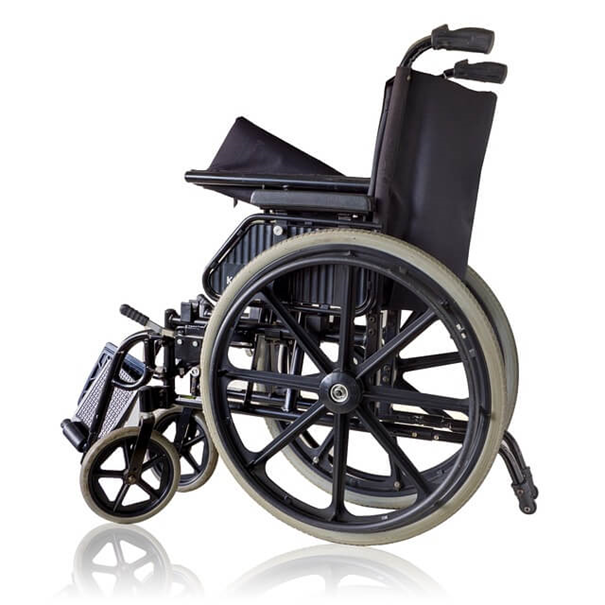
Why are basketball wheelchairs tilted?
You may be aware that the wheelchairs used when playing this sport are tilted. But have you ever wondered why? It turns out there are many reasons. Here are some of them.
- It gives people more maneuverability – The tilt in the wheelchair allows the player to shift their center of gravity and balance, so they can make fast turns and move around the court easily.
- You’ll have better reach – Tilting the chair forward gives you more forward reach, which is vital if you want to shoot, pass, or dribble the ball during a game because you can reach the basketball more easily.
- You can move faster – As you sit in a more forward-tilted position, you’re often also in a more aerodynamic position, meaning you’re able to move around the court much faster.
- It lowers your center of gravity – This means that you have more stability in a forward-tilted chair, so there is less chance you’ll end up tipping over during intense matches.
- It can give you a defensive advantage – if you play in a defensive position, you can use the tilt to get yourself into a lower, more stable position that makes it harder for your opponents to pass the ball or score against you.
- It’s more comfortable – The tilted chair affords you more comfort and lessens the risk of straining or injuring your upper body when playing.
- More scope for customization – All wheelchair basketball can be customized, so the exact degree of tilt can be changed to suit your personal needs and particular playing style.
Basketball wheelchairs, then, are titled forward to allow you to perform at a high level and be competitive in the sport.
If you’re interested in why wheelchairs are tilted, why not check out my post called “Why are wheelchair wheels angled?” for more on a closely related topic.
When was wheelchair basketball introduced to the Paralympics?
Wheelchair basketball made its Paralympic debut in 1960. The Paralympic Games which took place in Rome, Italy, served as the inaugural platform for this exciting sport. This introduction was a significant milestone in the history of adaptive sports, as it marked the first time wheelchair basketball was included as an official Paralympic event.
Since it was first introduced, wheelchair basketball has become one of the flagship events of the Paralympics, captivating audiences around the globe thanks to the remarkable skills and athleticism on display.
The sport not only gives people and athletes with disabilities a chance to showcase their talent, it also plays a vital role in promoting inclusivity and breaking down barriers, both on and off the court, highlighting the potential disabled people have and what they can achieve.
Let’s learn a little more about it, with some cool facts about the sport.
What are some facts about wheelchair basketball?
Here are some intriguing facts about wheelchair basketball.
- Players in wheelchair basketball are classified based on their level of ability, with a point system from 1.0 (the least able) to 4.5 (the most able). Teams must maintain a total point value on the court at any given time, which makes sure the sport is fair.
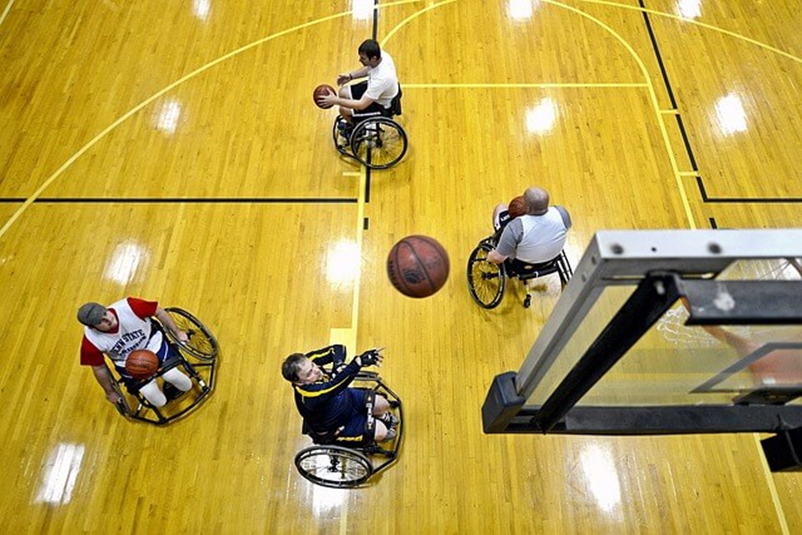
- The court used is the same size and has the same layout as the one in traditional basketball.
- Unlike in traditional basketball, wheelchair basketball players are allowed to dribble with one or both hands simultaneously.
- Players are allowed to crash into the wheelchairs of their opponents to gain a positional advantage, but too much contact is penalized, as is anything considered dangerous.
- Wheelchair basketball gives disabled athletes, and disabled people in general a chance to participate in a high-impact team sport.
- This sport is played in many countries around the world, including in various national and international competitions, like the Paralympic Games and World Championships.
- Players are often held up as role models, which challenges stereotypes that exist surrounding what disabled people can achieve both within, and outside of sport.
- The sport has seen continuous innovation in terms of wheelchair design, including the development of specialized sports wheelchairs that are designed for performance on the basketball court.
- Wheelchair basketball is one of the few sports where both male and female athletes can compete on the same team. This gender-inclusive aspect is a testament to the sport’s commitment to equality.
- Players in wheelchair basketball develop exceptional wheelchair-handling skills, allowing them to navigate the court with precision and speed. These skills include quick turns, tight maneuvering, and controlled stopping.
- The wheelchairs used in the sport are designed to enhance speed, agility, and stability. They often feature three or four large wheels, a lowered seat, and strapping to secure the player.
- Wheelchair basketball is open to people with a wide range of mobility impairments, from spinal cord injuries to amputations, and it gives people who have different levels of skill a chance to shine.
- The National Basketball Association (NBA) has collaborated with wheelchair basketball organizations, including promoting the sport to a wider audience.
- Wheelchair basketball isn’t only for elite athletes. Many countries have local leagues and community programs, making the sport accessible to a wide range of people.
These facts show the rich history, inclusivity, and adaptability of wheelchair basketball, making it a remarkable sport worthy of attention.
Do you bounce the ball in wheelchair basketball?
Yes, in wheelchair basketball, players do bounce the ball just like in traditional basketball. Bouncing the ball (dribbling) is a fundamental skill of the game, allowing players to move the ball while in their wheelchairs and maintain possession as they navigate the court. Wheelchair basketball players use a combination of one-handed and two-handed dribbling techniques to move the ball around the court, pass it to their teammates, and make their way to the basket for scoring opportunities. The rules for dribbling in wheelchair basketball are similar to those in the traditional version of basketball, save the fact you can use both hands at the same time.
Do they lower the hoop for wheelchair basketball?
Yes, the regulation hoop height in wheelchair basketball is lowered compared to traditional basketball. In wheelchair basketball, the hoop is typically set at a height of 10 feet above the floor, which is the same height as in able-bodied basketball. However, for specific levels of play and for junior wheelchair basketball, the hoop can be lowered to 9.5 feet to accommodate players with different abilities and ensure the game is fair. The decision to lower the hoop may vary depending on the specific league, tournament, or age group, but it is done to make the game more accessible and enjoyable for players.
Summary: When was wheelchair basketball invented?
In wrapping up “When was wheelchair basketball invented?” I’ve answered that question, discovered how the idea for it came about and talked about the significance of forward-tilted wheelchairs.
I’ve also shared some intriguing facts about the sport and found two important ways the game and rules can be adapted to suit disabled people, whether or not they’re professional athletes. This sport has evolved to become not only a global phenomenon but a symbol of inclusivity.
It continues to evolve, welcoming people from all walks of life to join the court, savor the excitement, and become part of a vibrant community. If you fancy trying it out, why not give it a go? Have fun!