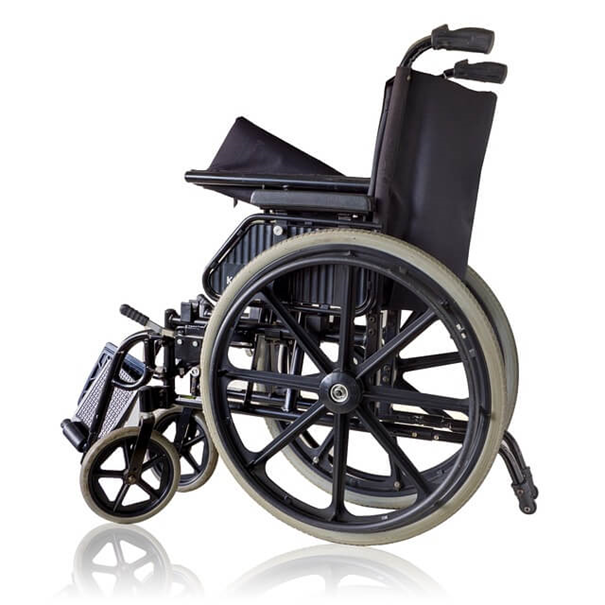
George Klein, a Canadian inventor, invented the electric wheelchair, during World War II to assist injured veterans. His invention provided greater mobility and independence for people with mobility issues and laid the foundations for developing power wheelchairs.
Since then, the electric wheelchair has become an essential assistive device for people with mobility problems, enhancing their ability to move and participate in various activities.
In the vast landscape of technological advancements that shape our world, some inventions stand out for their utility and profound impact on individual lives. The electric wheelchair is one such innovation, a beacon of empowerment for those with mobility problems. As we navigate the bustling streets of progress, we must pause and acknowledge the brilliant minds behind these transformative devices.
In this article, I’ll discover more about the inventor of the electric wheelchair, and delve into the history that led to its creation and development.
Who was George Klein?
Klein was born in Hamilton, Ontario in 1904. He was practical and got into a school of engineering where he learned the effectiveness of teamwork and honed skills that served him well throughout his life.
He later joined his former professor at the National Research Council of Canada. Klein worked in concert with him and many others on different projects.
This collaboration eventually led to the creation of the first mass-produced electric wheelchair, originally named for the inventor.
When he died at 88, Klein had contributed inventions to the war and been instrumental in one of the best inventions of the 20th century.
The advocacy of a Second World War Veteran, John Councell, was instrumental in the development of the electric wheelchair as a way to give quadriplegics like himself what they needed from a mobility aid. Within a few years, major wheelchair manufacturing companies had embraced the technology and made it available to disabled people across the US and Canada.

The history of the electric wheelchair
Here’s a brief history of the electric wheelchair.
- The first mention of a wheelchair is hard to track down, but historians think they’ve found evidence that mobility devices of some description existed in ancient Greece and China.
- In 1595, to help Philip II of Spain, who suffered from gout and had difficulty moving around, an inventor devised an elaborate chair for him.
- John Dawson invented the Bath wheelchair in 1783. It was so successful that it outsold all other types of wheelchairs through to the early 19th century. The main problem with the Bath wheelchair was that it was very uncomfortable. Consequently, many improvements had to be made to the design in the latter 19th century.
- The first patent for a wheelchair came in 1869. The patent was for wheelchair casters and a rear push feature. This is thought to be the earliest example of this type of wheelchair model.
- Investors introduced rubber wheels to the design of wheelchairs between 1867 and 1875. Rubber wheels were said to look like those used on a bicycle from the same period. This laid the groundwork for push rims, which allowed people to move more independently. However, this innovation didn’t happen until 1881.
- 1916 saw the invention of a type of electric wheelchair built and used in London. This was a very early experiment, which was built upon in the 1950s.
- The folding wheelchair was designed and built by the engineer Henry Jennings in 1932. Its design was similar to what you can buy today.
- In 1953, George Klein invented the first official electric wheelchair. The initial idea was conceived as a way to support injured veterans returning from World War II. This early example of an electric or power wheelchair had heavy wheels, which were hard to maneuver and steer. Despite its limitations, it was eventually mass-produced, indicating a demand for a more refined electric wheelchair.
- Since the 1950s, the wheelchair market has only grown, and the wheelchair has become more significant than ever. Indeed, the World Health Organization (WHO) deemed having a wheelchair when you need one a basic human right.
- More recently the market has seen a growing demand for reliability, innovation, and comfort. Newer power and electric chairs can turn in tighter circles, have a nimbler design, and are more comfortable than ever.
- Batteries have also grown smaller over time. Lead acid batteries were popular during the 1990s and early 2000s but are significantly larger than the lithium-based batteries commonly used in electric wheelchairs today.
When were power wheelchairs invented?
The development of power wheelchairs began in the 1950s. The electric wheelchair was invented during World War II in the 1940s. However, widespread production didn’t happen until the 1950s. This was a significant milestone in the development of assistive technology for disabled people. Advances in technology and design have continued to improve power wheelchairs over the years, improving accessibility and allowing a greater degree of independence for everyone.
Why was the electric wheelchair invented?
The electric wheelchair was invented to address the mobility needs of people with physical disabilities, and, more particularly, wounded veterans of World War II. George Klein developed the electric wheelchair during the 1940s.
The electric wheelchair enabled people to get around more easily without relying on help from others. Now, electric and power wheelchairs have helped many people lead more independent lives.
What are the advantages of an electric wheelchair?
Electric wheelchairs offer several advantages, making them invaluable to disabled people. Here are some of the chief benefits.
- Promotes independence – Electric wheelchairs allow users to move independently without relying on their physical strength or help from others to get around.
- Easy to use – Using an electric wheelchair takes less effort than propelling a manual wheelchair, especially for people with limited upper body strength or fitness.
- Better mobility – Electric wheelchairs provide enhanced maneuverability because you can negotiate tight spaces, turn easily, and get around obstacles more easily than in manual wheelchairs.
- Less physical strain – Electric wheelchairs lessen the physical strain on users because you don’t have to propel them yourself. This can be especially helpful for those with conditions affecting their strength and stamina.
- They have customizable features– Many electric wheelchairs come with customizable features, like adjustable seating positions, and programmable controls, providing more comfort to users.
- You can usually go further on one charge – Electric wheelchairs typically have longer battery life, allowing you to cover greater distances without needing to recharge the batteries.
- They are more versatile – Quite a few electric wheelchairs can be used indoors and outdoors, so you can move between different environments easily.
- They have advanced features – Some wheelchairs include advanced features like automatic braking, and obstacle detection designed to make your life safer and easier.
These advantages collectively contribute to an improved quality of life for people with mobility impairments, allowing them to engage more fully in daily activities and participate in the community.
What are the drawbacks of electric wheelchairs?
While it’s true that electric wheelchairs offer many advantages to users, there are some disadvantages you should be aware of too.
- The high cost – Electric wheelchairs can be more expensive than manual wheelchairs, and the cost may not always be fully covered by insurance, meaning people have to think about it before deciding to buy one. However, it is possible to apply to charities to help with the funding. Check out my article on how much it costs to rent a motorized wheelchair for more options.
- Weight and size – Electric wheelchairs are generally heavier and bulkier than manual wheelchairs, which may lead to issues with storage and transportation. Read ‘How much does a standard wheelchair weigh?’ for more details.
- You’ll have to rely on the battery – Electric wheelchairs rely on batteries, and if the battery runs out, is damaged, or doesn’t work as it should, you may be left without a way to get around until the problem is solved.
- Some electric wheelchairs may struggle to negotiate some types of terrain – Some electric wheelchairs may struggle with rough or uneven terrain, meaning they may have limited outdoor use.
- They often need maintenance – You must regularly maintain an electric wheelchair to ensure it works properly. It’s better to be proactive about addressing any potential problems with your wheelchair before they become a more pressing issue. Repairs can also be complicated and expensive.
- You’ll need to learn to use it – If you’re using an electric wheelchair for the first time, you might need to practice using it, so that you can get used to the controls.
- Even with an electric wheelchair, you’re still likely to face accessibility challenges – older buildings without proper elevators (lifts) or ramps may be difficult to get into and around.
- You’re vulnerable to weather – Exposure to extreme weather conditions, like heavy rain or snow, can affect the performance of electric wheelchairs and may be tricky to deal with.
You should note that the drawbacks of your particular electric wheelchair can vary depending on the model and features of the one you use and will depend to a certain extent on your individual needs and preferences. Despite some of the problems associated with electric wheelchairs, they remain essential for many people and give them an invaluable means to improve their quality of life.
Summary: Who invented the electric wheelchair?
George Klein’s invention during World War II not only revolutionized mobility for injured veterans but set in motion a transformative wave that continues to ripple through the lives of countless people. I hope you’ve enjoyed learning a little about who invented the electric wheelchair and its history. It’s fair to say this it’s a symbol of progress that extends far beyond wheels and circuits, it has allowed millions to achieve a greater degree of independence.
The electric wheelchair, then, is not just an invention. It’s a symbol of possibility, a testament to what can happen through ingenuity and teamwork, and as such, it’s an invention as worthy of celebration as any other in the modern world.